






Hit enter to search or ESC to close
Share with
Can You Build a Garage Under Power Lines?
7 January 2026
Building near electricity infrastructure isn’t something most people think too much about until they’re ready to put up a garage and suddenly those overhead power lines become impossible to ignore. Safety, clearance distances and access for maintenance all come into play. But how important are they really?
It seems like a simple question, but once you start digging into power companies, easements, minimum clearance distances, and all the little rules that pop up around electricity infrastructure, it becomes a bit trickier than expected. So before you start your development application or sketch out plans, it’s worth understanding exactly what you’re dealing with. Below, you'll find everything you need to know about building a garage under power lines.
The Quick Answer
In most locations, the short answer is generally "no.” A garage is considered a permanent structure, and structures under overhead power lines come with certain restrictions because they can interfere with the safe operation, access and maintenance of the network.
Where it Gets Complicated
Even though in most cases you aren't able to build a garage under powerlines, as with most building regulations, there are certain exceptions. These usually come into play depending on whether the lines above you are low voltage lines, distribution lines or higher-voltage transmission lines. This is because line voltage affects required clearances.
Transmission lines and transmission corridors almost always have strict no-build zones, while the lower-voltage overhead lines you see running along suburban streets still require safe distance and enough room for maintenance crews to work safely.
Also, sometimes the deciding factor isn’t the line itself but the easement sitting over your property. Even if the lines don’t look particularly dangerous, the easement ensures the power company has uninterrupted access with cherry pickers, specialised equipment and space to maintain the wires over the entire time the network is installed. A garage built underneath can block that access and immediately breach the conditions.
Understanding Utility Easements and Why They Matter
Once you start looking into the specifics, the next thing that usually pops up is easements. Many people first hear the word “easement” when they see a faded line on an old survey plan, and it can feel a bit mysterious, but in reality, an electricity easement is simply a designated slice of land that allows a network operator to access their infrastructure.
That could be poles, service drops, underground services, or overhead lines. If your property includes one of these easements, it usually means no building, no fencing, no retaining walls and no structures of any kind on that section of land.
The reason is practical more than anything else. Crews need to be able to get close to the wires, stand safely on the ground underneath them, move materials, trim trees, or use large equipment without risking contact. Even a small shed or a garage roof could affect how close someone can work or how safely they can maintain the infrastructure.
The easement also keeps enough space between the ground and the wires for wind movement, long distances between poles, sagging, and all the other factors that influence clearances.
Safety Considerations When Building Near Overhead Power Lines
Even when there’s no easement involved, safety remains a big part of the equation. When you build too close to overhead powerlines, you create a situation where someone could accidentally bring ladders, scaffolding, equipment or materials too close to live wires. In these instances, the risk of electric shock becomes very real, especially near higher voltage lines that can arc through the air.
It’s not only construction workers who are affected, though. Once your garage is installed, you or anyone else on your property could come dangerously close to the lines while doing routine jobs like cleaning gutters or even parking tall vehicles. Clearance distances exist for a reason, and they help maintain a safe distance between people, structures and electricity.
Common Mistakes Around Power Line Restrictions
Those are just the safety considerations, though. It helps to know some of the most common mistakes that trip many people up when they’re dealing with overhead power lines and all the rules that come with them.
Misunderstanding Low Voltage Lines
A lot of people assume low voltage lines are harmless or don’t fall under the same rules as the bigger overhead powerlines. In reality, they still need safe distance, safe access and enough room for crews to maintain the wires without risk. Even the smaller lines can cause electric shock or interfere with equipment if a structure is too close.
Overlooking the Ground Space
You're obviously going to be focusing on the wires in the air, but this means you might forget about what needs to happen on the ground. Network operators often need clear work zones for cherry pickers, ladders, materials and specialised tools. If a garage blocks that access, even partially, it can breach regulations and make maintenance unsafe.
Forgetting About Future Work or Line Movement
Wires don’t stay perfectly still. Wind, temperature changes and long distances between poles can cause movement and sagging over time. Crews may also need to upgrade poles or replace equipment in the future. A garage positioned too close today could become a hazard later if the lines shift or maintenance needs change.
Council, Permit and Power Company Requirements
All of these issues tend to come to the surface again when you get to the formal approval stage, which is where the council and the power company take a much closer look at how your plans fit with their safety rules.
Most councils require you to submit development applications for garages, and these applications usually ask whether there are overhead lines, poles or other infrastructure near the proposed building location. If so, it’s common for the council to request written approval from the power company before work begins.
It's important to note, however, that approval isn't guaranteed. Network operators look at the type of lines, the voltage, the clearances, maintenance access, and whether your garage could restrict safe access. They also check if your land falls within a transmission corridor, if there are details about an earthed screen, and whether there’s a need to keep the space clear for future upgrades or safe operation.
Alternatives if Building Under Power Lines Isn't Allowed
If the answer from the power company is no, it doesn’t always mean you have to give up entirely and there are always workarounds. For instance, you could potentially shift the proposed garage further across the property to maintain the necessary distance. Or you can redesign the structure to keep the roofline lower or position the building at a safe angle relative to the lines.
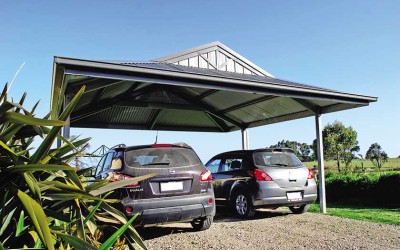
There’s also the option of choosing a carport instead of a fully enclosed garage, or adjusting your land use so the garage sits in a different location. In rare situations, underground relocation of service drops or minor infrastructure changes may be possible, though this can be expensive and isn’t guaranteed.
In all cases, what matters most is identifying what is and isn’t permitted on your private property before you commit to any construction costs.
Cost Considerations and Potential Extra Fees
But what are those construction costs? Assuming you've got the full go ahead, you may need supervised work from the power company or temporary changes to equipment. In some cases, crews must attend the site to ensure everyone can work safely, and those services aren’t usually free.
You may also need specialist advice if the lines have unusual characteristics, such as complex wind load, long spans between towers, or older poles needing upgrades. All of these factors influence the final price. Also, if you decide to relocate your garage or redesign it, you'll need updated plans and possibly a resubmission of your development application.
Start Planning Your Dream Garage Today

If you’re ready to start shaping ideas into something real, or are still unclear about where you stand with your overhead powerlines, Fair Dinkum Builds makes the whole process easy. Not only can we offer expert advice, but our Shed Designer App lets you experiment with layouts, tweak dimensions and explore different rooflines until you find the perfect fit for your property. Once you’ve got a design you’re happy with, you can get in touch for a free quote and chat with our team about the next steps.
FAQs About Building a Garage Under Power Lines
Can you ever build a garage directly under overhead power lines?
In most cases, no. Permanent structures interfere with safe access and maintenance, and only in very limited circumstances will a network operator consider exceptions.
Why are clearance distances so important?
Clearance distances prevent accidental contact and electric shock, and they ensure crews can work safely beneath the lines.
How do I know if my property has an easement?
Check your title or survey plan, where easements are usually marked clearly. If one runs under the lines, that portion of land must remain clear.
Is it different if the lines are low voltage?
Low voltage lines still have strict rules, just with smaller clearances. The power company still needs to confirm your garage won’t impact safe operation.
Do councils allow development applications for garages near overhead power lines?
They can, but they will usually need written approval from the power company before granting a permit. Without the required clearances, councils rarely sign off.
What happens if I build without approval?
Work can be stopped immediately, and you may be fined and required to remove the structure.
Do power companies ever grant exceptions?
Sometimes, but it’s never guaranteed. The network operator decides based on safety, cost and how the change affects the wider network.