





Hit enter to search or ESC to close
Share with
Carport Sizes & Dimensions Guide
11 May 2023
Choosing the right carport dimensions makes the difference between a structure that works perfectly and one that feels cramped every time you park. Standard carport sizes in Australia range from 3m x 6m for a single vehicle through to 12m x 6m or larger for four cars, but the right size for your property depends on your vehicles, how you'll use the space, and what your local council allows.
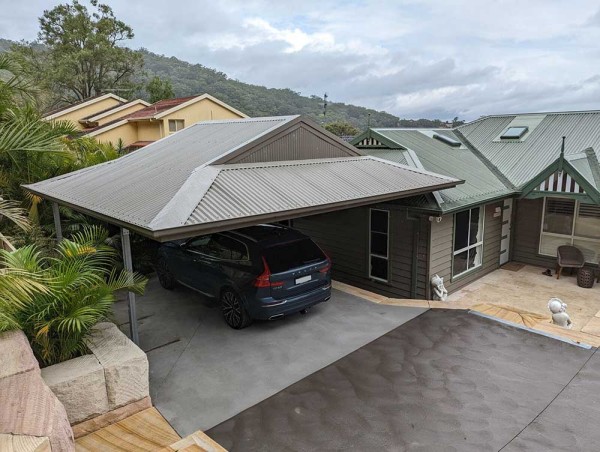
Getting carport sizes right from the start saves you from rebuilding later when you realise the space doesn't suit your needs. Fair Dinkum Builds designs every carport to your specific requirements, whether you need a standard single carport or a custom build for multiple vehicles, caravans, or boats. Request a quote to discuss the dimensions that work for your property.
Standard Carport Sizes in Australia
Here are the most common carport dimensions used across Australia:
| Carport Type | Width | Length | Minimum Height | Best Suited For |
|---|---|---|---|---|
| Single | 3m | 6m | 2.4m | One sedan, hatchback or small SUV |
| Double | 6m | 6m | 2.4m | Two vehicles side by side |
| Triple | 9m | 6m | 2.4m | Three vehicles or two cars plus storage |
| Four-car | 12m | 6m | 2.4m | Four vehicles, multiple utes, or mixed use |
| Caravan/RV/Boat | Varies | 7m-10m+ | 3.3m-3.6m+ | Tall recreational vehicles and boat |
Single Carport Dimensions
A single carport typically measures 3m wide by 6m long. This size suits one sedan, hatchback or small SUV with room to open doors and walk around the vehicle. The 3m width gives you approximately 300mm clearance on each side of a standard car, which provides enough space to exit comfortably without squeezing past the posts.
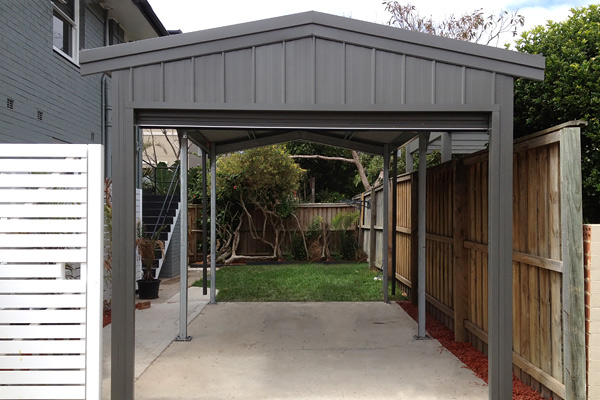
Where single carports get tight is with larger vehicles. If you drive a ute, 4WD, or van, the standard 3m width leaves minimal clearance. Most customers with these vehicles go 3.5m or 4m wide to make parking less precise and door opening easier. The 6m length works for most passenger vehicles but may feel restricted if you have a long-wheelbase ute or need to store items at the front or rear.
A single carport makes sense when you have one vehicle to protect, limited space on your property, or budget constraints that rule out a larger build. Adding width costs less than you might expect and makes daily use far more comfortable. Check out our single carport page to see design options.
Double Carport Dimensions
Double carports start at 6m wide by 6m long. This size fits two vehicles side by side with comfortable door clearance between them. The 6m width typically gives you around 300mm to 400mm between vehicles and similar clearance from the posts on each side. You can open car doors without hitting the vehicle next to you, which is important when you're parking daily.
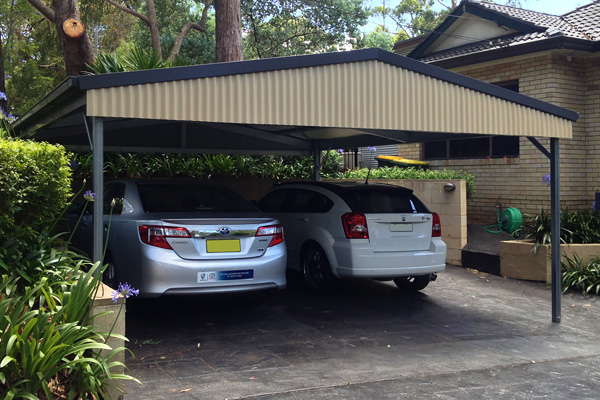
For larger vehicles like utes or 4WDs, most people go 6.5m to 7m wide. The extra width makes parking easier and gives you room to store items between or beside the vehicles. Some people use one bay for a vehicle and the other for storage, workshop space, or outdoor equipment. The 6m length suits standard vehicles but you might extend to 7m or 8m if you have long utes, want front or rear storage, or plan to use part of the space for something other than parking.
Double carports are the most popular size because they suit two-vehicle households whilst fitting on typical residential blocks without dominating the property. Visit our double carport page to explore configurations.
Triple Carport Dimensions
Triple carports measure 9m wide by 6m long as a standard starting point. This configuration gives you space for three vehicles parked side by side or two vehicles with a full bay dedicated to storage, workshop activities, or outdoor equipment. Most triple carports are custom builds because they're large structures that need to suit specific property layouts and uses.
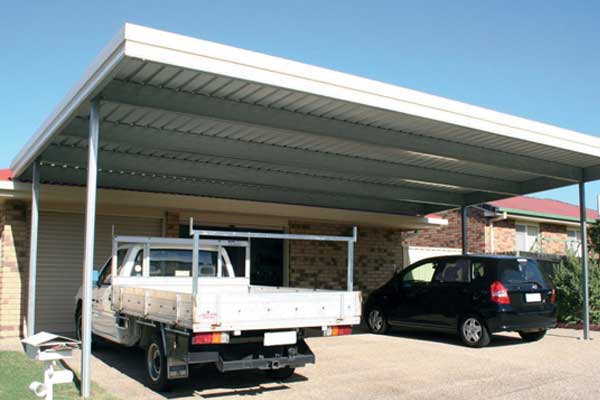
A triple carport makes sense when you have three drivers in the household, run a home business that requires vehicle parking, or want substantial covered workspace alongside vehicle protection. Rural properties often choose triple carports to house a mix of cars, utes, and equipment under one roof. The extra bay provides flexibility for future needs without requiring another building project later.
The 9m width requires adequate space on your property and may trigger council approval requirements depending on your location. The structure also needs proper engineering for the wider span. Your Fair Dinkum Builds representative will confirm what's possible on your site. See our triple carport page for examples.
Four-Car Carport Dimensions
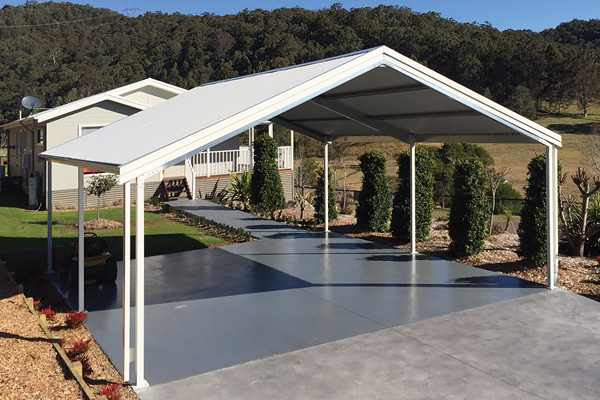
Four-car carports start around 12m wide by 6m long, though many go larger to suit specific requirements. This is always a custom build because the size, vehicle types, and site conditions vary significantly between properties. Four-car carports suit larger families with multiple drivers, rural properties housing vehicles and machinery, or homes that double as workspace with business vehicles to cover.
You can configure four-car carports as four bays side by side or in a back-to-back arrangement with two rows of two. Side-by-side works when you have the width available and want easy access to all vehicles. Back-to-back suits narrower sites and can create a courtyard effect if you close one end. The choice depends on your property shape, how you use the vehicles, and what looks right for the location.
Height and length often increase on four-car builds because these structures typically house a mix of vehicle types. You might have passenger cars in some bays and utes or vans in others, which means you need clearance for the tallest vehicle. Length might extend to 7m or 8m if you're storing work equipment, have long-wheelbase vehicles, or want workshop space integrated with vehicle parking.
Caravan, RV and Boat Carport Dimensions
Height becomes the critical dimension when you're covering caravans, RVs, or boats. Most of these vehicles need 3.3m to 3.6m minimum clearance to fit under the roof, though some larger RVs require more. You measure from ground level to the highest point on the vehicle, including roof-mounted air conditioners, antennas, or roof vents, then add clearance so you're not scraping on entry.
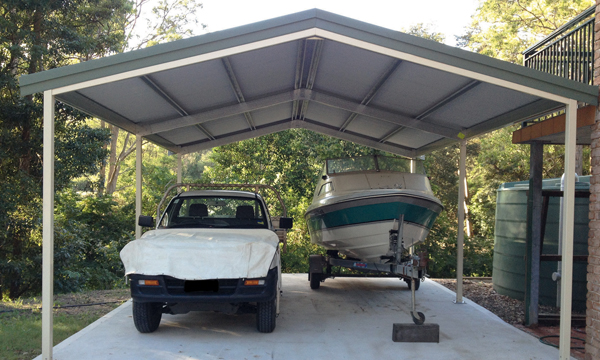
Length requirements extend beyond the vehicle itself. Caravans and boats on trailers need extra room for the drawbar and coupling at the front. A 6m caravan might need an 8m or 9m long carport once you account for the trailer components. Boats on trailers often require wider spans than standard carports because the beam width plus trailer exceeds typical car widths. A 5m wide boat on a trailer might need a 4m or 4.5m wide carport.
Freestanding carports work better than attached structures for tall vehicles because you're not limited by the house fascia height. You can build the carport as high as needed and position it where vehicle access makes sense rather than forcing it against the house. Purpose-built caravan and boat shelters often include higher clearances, extended lengths, and reinforced engineering for the unique requirements of recreational vehicles.
Learn more about specialised options on our boat shelter and caravan shelter pages.
How to Work Out the Right Carport Size for Your Vehicle
Measure Your Vehicle's Actual Dimensions
Start by measuring your vehicle's actual dimensions. You need length from the front bumper to the rear, width at the widest point including mirrors, and height from ground to the tallest point including roof racks, aerials, or roof boxes. Write these measurements down because they form the basis for your carport size.
Add Side Clearance
Add clearance on all sides. You want at least 300mm per side for comfortable entry and exit. This gives you room to open doors without catching them on posts or scraping the vehicle on entry. Most customers find 400mm to 500mm per side more comfortable, especially if you have children who swing doors open or if you regularly load items into the vehicle whilst it's parked.
Add Front and Back Clearance
Add 600mm to 900mm front and back. This clearance lets you walk around the vehicle, gives you room if you overshoot whilst parking, and provides space for front or rear storage. Some people want more length to store items like bicycles, tools, or outdoor equipment at one end whilst the vehicle occupies the other.
Factor in Door-Opening Space
The side clearance needs to account for how far your doors open. Standard car doors need roughly 600mm when fully open, though this varies by vehicle. If you have large SUV doors or if multiple people exit simultaneously, you need adequate width to prevent doors hitting posts or adjacent vehicles in a double or triple carport.
Account for Your Tallest Vehicle
Account for the tallest vehicle you'll park under the structure. If you currently drive a sedan but might buy an SUV or ute in future, build for the taller vehicle now. It costs far less to add height during construction than to raise the roof later. Similarly, if you occasionally park a caravan, boat, or high-roof van under the carport, size the height for that vehicle rather than your daily driver.
How Height and Roof Style Affect Usable Space
Standard Height Clearance Requirements
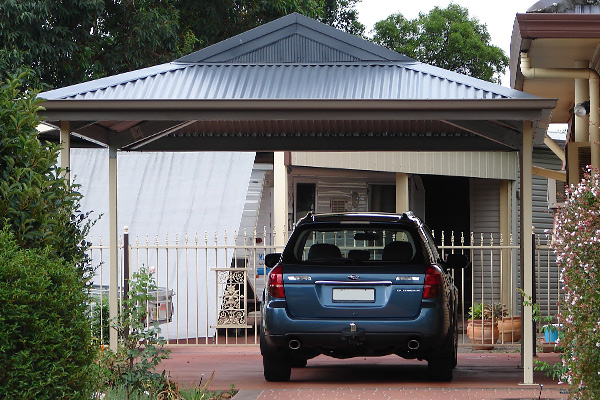
Carport height isn't just about fitting the vehicle under the roof. Standard clearance sits at 2.4m, which suits most passenger vehicles with room to spare. You go higher when you drive taller vehicles, want to add roof racks or roof boxes without scraping, or plan to store boats, caravans, or commercial vehicles under the structure.
Skillion Roof Heights
Skillion carports slope from one side to the other, which means you have maximum height at the high side and minimum height at the low end. If you specify 2.4m clearance, that's measured at the low end, and the high side will be taller depending on the roof pitch. This works well for single vehicle parking where you position the vehicle under the high side.
Gable Roof Heights
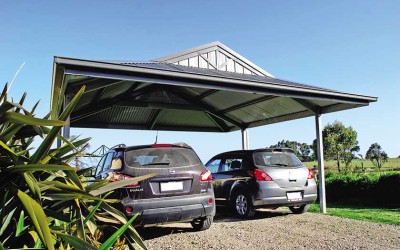
Gable carports give more headroom in the centre where the two roof slopes meet at the ridge. The height peaks in the middle and reduces towards each side. This works well for double or triple carports because you get maximum clearance in the centre bay with slightly less height at the outer bays. Most vehicles fit comfortably across all bays.
Flat Roof Heights
Flat roofs maintain consistent height across the entire span. What you specify is what you get from one side to the other. This makes flat roofs predictable for clearance calculations and well suited to properties where you want minimal visual impact or where you're building near height restrictions.
For more details on how roof styles affect design and functionality, read our article comparing gable vs skillion roofs and check the product pages for gable carports and flat roof carports.
Does Carport Size Affect Council Approval?
Carport size directly affects whether you need council approval. Most states have size-based exemptions that let you build without a permit if the structure stays under certain dimensions. Exceed those thresholds and you'll need to submit plans and wait for approval before starting construction.
The exemption limits vary by state and sometimes by council within the same state. A carport that's exempt in one location might require approval in another. Common size triggers include total floor area, distance from boundaries, height limits, and whether the structure attaches to the house. Some councils restrict carports to a percentage of your block size.
Fair Dinkum Builds helps with approvals when your carport requires them. Your local representative knows the rules for your area and can prepare the necessary documentation. They'll tell you upfront whether your desired size needs approval and what the process involves. Getting this right at the start prevents delays and ensures your carport complies with your local council's regulations.
For detailed information on your state's requirements, read our state-specific guides:
Attached vs Freestanding: How Location Affects Sizing
Height Limitations of Attached Carports
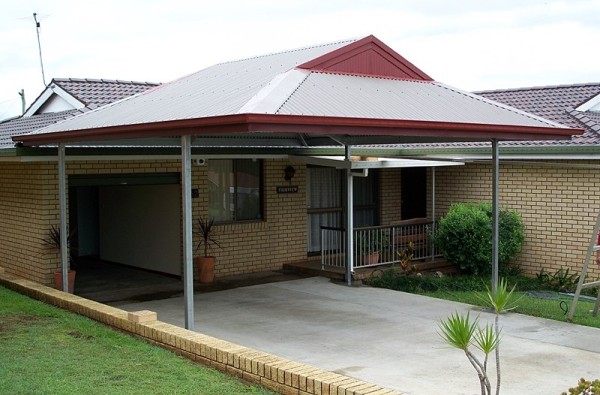
Attached carports connect to your house, which limits height to your existing fascia level. If your house eaves sit at 2.4m, your attached carport can't go higher without major modifications to the house roofline. This works fine for standard vehicles but restricts you if you need to cover tall vehicles like caravans, RVs, or high-roof vans.
Flexibility of Freestanding Carports
Freestanding carports stand independent of the house, which means you can build them as tall as needed. You're not constrained by house height, so freestanding suits situations where you need extra clearance or where the house attachment point doesn't work for your vehicle access. Freestanding carports also give you more flexibility in positioning the structure where it makes sense for parking flow.
Property Boundaries and Setback Requirements
Property boundaries and setbacks constrain both width and length regardless of whether the carport attaches or stands free. Your local council requires certain distances from the fence line, neighbouring properties, and sometimes from the street. These setback requirements might force you to reduce the carport size or reposition it on your property. Always check with your local council before finalising dimensions.
For more information on attachment options and restrictions, read our guide on whether a carport can be attached to a house.
Why Custom Carport Sizes Beat Off-the-Shelf
The Problem with Standard Sizes
Standard sizes exist because they're cheaper for kit suppliers to produce in volume, not because they're the right fit for every property. A 6m x 6m double carport suits many people, but it might be too wide for your available space, too narrow for your utes, too short for your long vehicles, or too tall for council restrictions. Off-the-shelf means you adapt your needs to the product rather than the other way around.
How Fair Dinkum Customises Dimensions
Fair Dinkum Builds designs every carport to your specific dimensions, vehicle requirements, and site conditions. You specify the width that gives you comfortable clearance for your actual vehicles, the length that accommodates your parking habits and storage needs, and the height that works for your tallest vehicle. The structure gets engineered for your exact measurements, property location, and local wind ratings.
When Custom Sizing Matters Most
Custom sizing becomes particularly important for four-car carports and caravan, RV, or boat shelters where off-the-shelf options rarely exist in the right dimensions. These builds need to suit your specific mix of vehicles, equipment, and uses. A pre-made solution either won't be available or will force compromises that affect how well the structure works for your property.
Cost of Custom vs Standard
The cost difference between standard and custom dimensions is often smaller than people expect. You're paying for materials and engineering either way, and adjusting the measurements to suit your needs properly costs less than building twice because the first attempt didn't fit right. Contact your local Fair Dinkum Builds team to discuss dimensions that work for your situation.
FAQs
What is the minimum clearance height for a carport?
The minimum clearance height for a carport is typically 2.4m, which suits most standard passenger vehicles with room to spare. However, you should measure your vehicle's actual height including any roof racks, roof boxes, antennas, or other additions, then add at least 100mm to 200mm clearance. If you drive a 4WD, van, or plan to cover a caravan or boat, you'll need 3m to 3.6m or higher. Always size for the tallest vehicle you'll park under the structure, including any future purchases. It's easier to build the right height initially than to raise the roof later.
Can I build a carport wider than standard sizes?
Yes, you can build a carport as wide as your property allows and your budget permits. Standard sizes like 3m for single and 6m for double carports suit many situations, but Fair Dinkum Builds customises dimensions to your needs. If you want extra width for larger vehicles, storage space, or workshop area, the carport gets designed to those specifications. Wider spans require stronger engineering to support the structure, and you'll need to check with your local council about setback requirements from property boundaries. Your Fair Dinkum Builds representative will confirm what's achievable on your site and handle the engineering requirements.
How much space should I leave between the carport and my property boundary?
The required setback distance from your property boundary depends on your state's regulations and your local council's specific rules. Common requirements range from 450mm to 1m from the fence line, though this varies significantly between councils. Some councils allow building right to the boundary under certain conditions, whilst others require larger setbacks. Height restrictions often apply when building near boundaries. Always check with your local council before finalising your carport position and size. Your Fair Dinkum Builds representative can help you understand the rules for your area and design the carport to comply with local requirements.
Is a double carport worth it if I only have one car?
A double carport can be worth building even with one car if you value the extra space for other uses. Many people use the second bay for storage, keeping bikes, outdoor equipment, tools, or seasonal items protected from weather. Some use it as a covered workshop area or entertaining space when the weather doesn't cooperate. Others appreciate having the room for future needs, whether that's a second vehicle when children start driving or space for a boat, trailer, or caravan. The additional cost of going from single to double is often less than building a second structure later. Consider how you'd use the extra space and whether that value justifies the upfront investment.
Do I need a concrete slab for a carport?
A concrete slab isn't always required for a carport, but it's highly recommended for most installations. Concrete provides a level, stable surface that makes parking easier and prevents water pooling under your vehicle. It also stops weeds growing through, eliminates mud issues, and gives you a clean surface to walk on. Some councils require concrete or similar hard surfaces for carport construction. Alternatives like gravel or paving can work in certain situations, but concrete delivers the best long-term performance and maintenance. Fair Dinkum Builds can coordinate slab preparation as part of your complete project, ensuring proper base for your carport structure. Discuss foundation options with your local representative based on your site conditions and budget.
Quality Carports from Builders You Can Trust
Fair Dinkum Builds has designed and built thousands of carports across Australia since 2007. Our network of local experts understands regional requirements, site conditions, and what works in different climates. Every carport gets engineered to code with a 30-year system warranty covering wind resistance and structural performance.
If you're ready to build a carport with dimensions that suit your vehicles and property, contact your local Fair Dinkum Builds team for a quote. We'll discuss your requirements, confirm what's possible on your site, and design a structure that fits properly rather than forcing you to compromise.