COLORBOND® vs ZINCALUME® for sheds: which one should you build with?
Get a Quote
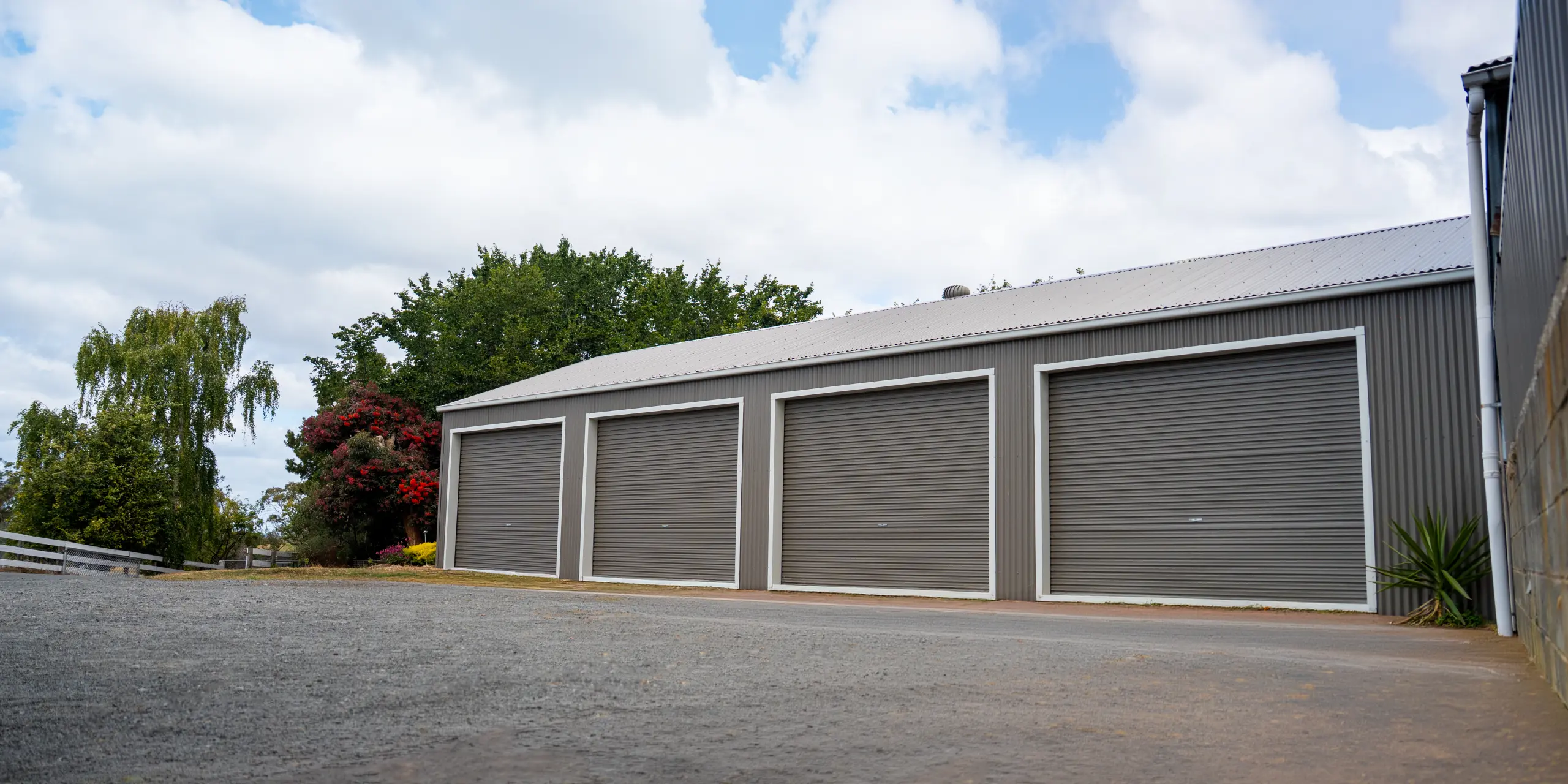
COLORBOND® or ZINCALUME® is a choice that comes up on a lot of shed builds, but the two aren't competing products in quite the way you might think. Beneath the surface, they are actually very similar products. COLORBOND® is a product that is made out of ZINCALUME® steel and then coated with a corrosion-resistant layer and paint. Both are produced by the same company, BlueScope Steel, here in Australia. Your local Fair Dinkum Builds team will recommend whichever suits your site, how you'll use the shed and the look you want. Where you're building, how the shed will be used and the finish you're after all play a part in the choice.
What's the difference between Colorbond steel and Zincalume steel?

ZINCALUME® is Australian steel that is coated in an alloy made mostly from aluminium and zinc. ZINCALUME® steel has an aluminium, zinc and magnesium alloy coating. The aluminium acts as a barrier, and the zinc and magnesium help protect cut edges and scratches. COLORBOND® steel takes the same ZINCALUME® core and adds another couple of layers: a corrosion-inhibiting primer followed by a baked-on paint finish. It's the aluminium in ZINCALUME® that gives it an advantage over traditional galvanised steel, where the protective coating is zinc alone.
COLORBOND® takes that ZINCALUME® base a couple of steps further. First, there’s a primer, which bonds to the surface and provides extra protection around scratches and cut edges. The coloured topcoat is then baked onto the steel in the factory. The result is a much tougher finish than if paint were to be applied later on site, which is when peeling and flaking can become a problem.
Leave ZINCALUME® unpainted, and it starts out with a bright, silvery finish. That shine doesn't last forever. As the steel weathers over the first few years, it gradually settles into a softer grey. COLORBOND® steel gives you a very different look, with more than 20 colours designed to match Australian roofing and guttering. Our COLORBOND® sheds page shows the different colours on completed builds.
Corrosion resistance: how Colorbond and Zincalume hold up in Australian conditions

Both materials resist corrosion, but they do it slightly differently. In the case of ZINCALUME®, the aluminium serves as a barrier to protect the steel, while the zinc is responsible for protecting the exposed surfaces around the fixings and cut edges. COLORBOND® steel starts with that same protection, then adds its extra coatings over the top.
The underside has a lighter backer coat, not the full paint system. You only have to look at the ZINCALUME® roofs scattered across the wheatbelt, many of which have been there for decades. As you move closer to the coast, it's a different story. Salt and humid air are harder on the steel, which is where COLORBOND®'s extra coatings start to earn their keep. The same applies around industrial areas, where airborne contaminants can speed up corrosion.
Neither material handles standing water particularly well. The same goes for debris left sitting on the sheets. Debris such as leaf litter trapped in a valley in the roof will retain moisture in contact with the metal and reduce its lifespan. It's why roof pitch and flashing details matter as much as the material. Getting the sheet pitch and flashing right can be just as important as choosing between COLORBOND® and ZINCALUME®.
Heat and energy efficiency: which shed material stays cooler?

Neither one is automatically the cooler option. Colour has more influence on the temperature inside a shed than whether the sheets are COLORBOND® or ZINCALUME®. When new, ZINCALUME® will reflect a lot of sunlight, and this is why it often is considered to be the cooler of the two. That changes with age. As the metallic finish weathers and dulls, some of that reflectivity goes with it.
With darker COLORBOND® colours, the story changes. Colours such as Monument® or Night Sky® will generally get hotter in the sun than bare ZINCALUME®. Go lighter with Dover White® or a Surfmist® COLORBOND® shed, and temperatures can be similar to ZINCALUME® or lower, without the glare. If keeping heat down is important to you, colour is the bigger lever.
The bigger difference comes from insulation. If you're planning to use the shed as a workshop or home gym, changing from one type of steel to the other will only get you so far. An insulated shed build with roof blanket and wall insulation will have a much greater effect on how comfortable the space is throughout the year.
Colour options and appearance: Colorbond steel vs Zincalume sheds

ZINCALUME® gives you one look. It comes in the same aluminium finish, bright when new and gradually turning grey as it weathers. Changing its appearance will require repainting it yourself.
COLORBOND® steel gives you many more options when looks are important, especially if you want your shed to match the colours that are already on your house. Woodland Grey® and Basalt® are two colours you'll see again and again on residential sheds. There's a fairly simple reason for that: they work with a lot of Australian homes without making the shed the first thing you notice in the yard.
Head out of the suburbs, and the choices often change. Pale Eucalypt® and Wallaby® tend to work better against open paddocks and bush, where a grey shed can stand out more than you'd expect.
A colour that looks great on a swatch can feel very different on a shed 10 metres from your back door. This is where colour comes into play in a big way. If the shed is going to be visible from the street or from the house, then you need to consider how it will fit in with its surroundings. Have a look through the COLORBOND® garages range, and you'll see what happens when the colours of the garage and home are carried through properly.
Cost and warranty: is Colorbond worth paying more for than Zincalume?

The extra spend on COLORBOND® makes more sense when the shed is located somewhere you can see it every day. Put the same shed at the back of a big property where you rarely see it, and spending more for a certain colour is less sensible. That's where ZINCALUME® starts to make more sense, particularly because it costs less. The difference increases with the size of the building, too, and covering a whole machinery shed with ZINCALUME® may save you quite a bit of money.
The warranties aren't quite the same either. Both products are backed by BlueScope. You're not just looking at the perforation of the steel. Depending on the warranty, the painted surface may also be covered for problems such as peeling, flaking or excessive colour change. Location can change what you're entitled to, though. Standard shed warranties require the building to be more than 1km from marine or industrial influence, on a slab, enclosed on all four sides, and at least 18m²
Material is only one line in a shed quote. For a sense of how it sits alongside size, doors, wind rating and the slab, our guide to shed kit prices puts the numbers in context.
Which material is right for your shed?

Two things decide it: what the building does, and who ends up looking at it. Most of what Fair Dinkum Builds puts up is COLORBOND®, though ZINCALUME® is genuinely the better call on some jobs, and we'll tell you when it's the better call.
Farm sheds, barns and industrial buildings
ZINCALUME® earns its place on big rural and industrial spans. Hay sheds and machinery storage sitting out of sight of the house are about function and cost per square metre, so the paint system buys you little. Our farm sheds and rural buildings are regularly specified this way.
COLORBOND® still wins where the shed faces the road or sits near the homestead. On commercial sites carrying branding, it is the obvious choice. Plenty of owners run a ZINCALUME® roof with COLORBOND® walls and doors to split the difference, which is a common approach on industrial buildings with large roof areas.
Garages, liveable sheds and patios
COLORBOND® is the sensible pick for anything attached to or near your home. Shed homes and garages live in your line of sight every day, and the colour choices mean the new build looks like it belongs. Liveable shed designs almost always go this way. That logic runs past the shed itself to anything else you attach to the house. A COLORBOND® patio off the back can be matched to the same roof and gutter colours.
Sheds in coastal and high-salt areas
Distance from the surf changes the specification on both materials. Salt laden air accelerates corrosion on any steel, and BlueScope sets minimum distances from breaking surf for standard COLORBOND® and ZINCALUME® products. COLORBOND® Ultra steel and SUPERDURA® Stainless are best suited for these types of locations. Stramit's data shows the allowable distance from breaking surf is much shorter for roofs than walls. For standard COLORBOND® steel it's more than 200m for roofs but more than 800m for wall.
Rain washed surfaces do better than sheltered ones, because salt builds up under eaves and awnings where rain never reaches. Your local Fair Dinkum Builds team will check the corrosion category for your site before specifying anything.
Design your Colorbond or Zincalume shed with Fair Dinkum Builds

With over 35 years behind us and a national network of licensed builders, your local Fair Dinkum Builds franchise walks you through the material and colour options at the design stage, then handles the entire process from engineering through to handover. You can take on as little or as much of the job as you like.
Some customers only want the structure delivered. Confident owner builders often go with shed kits and put the building up themselves, while everyone else gets a full build, with council approval and the slab handled alongside the construction. Either way, the engineering and the materials are the same. Request a quote, and your local team will price both materials so you can compare them properly.
Frequently asked questions
No. The main difference lies in the coating. Galvanised steel uses zinc for coating, whereas ZINCALUME® steel uses both aluminium and zinc. This makes the ZINCALUME® steel more durable compared to galvanised steel. Galvanised sheets are not used commonly in newly constructed sheds, but you will find many of them in old agricultural structures.
Neither requires much maintenance or regular painting. BlueScope states to wash areas rain doesn't reach at least every six months, and every three months on the coast. You can paint it later, but this voids the BlueScope warranty and won't last as well as a factory-baked finish.
Several environmental, installation and maintenance factors can reduce the service life of COLORBOND® steel sheeting. Avoid piling soil, mulch or garden beds against wall sheets, and prevent direct contact with wet or treated timber, which can expose the sheeting to prolonged moisture and potentially corrosive chemicals. Runoff or drainage from incompatible metals such as lead and copper should also be kept away from the sheeting.
Other commonly overlooked causes include allowing leaves, dirt and other debris to build up and retain moisture; failing to regularly wash areas that are sheltered from rain; leaving metal swarf or drilling debris on sheets after installation; using abrasive or unsuitable cleaning products; and allowing coastal salt deposits or industrial contaminants to accumulate. Internal maintenance guidance specifically recommends regular washing, with more frequent cleaning in coastal and industrial environments, and warns against abrasive or solvent-based cleaners. Installation guidance also calls for removing swarf from roof surfaces to avoid rust staining.
Care should also be taken when cutting, drilling or repairing sheeting. Damaged coatings, poorly treated cut edges and embedded iron particles can create potential corrosion points. Internal corrosion guidance specifically warns against using steel wool because it can leave iron particles behind and notes that burrs and inadequate coating coverage around cut edges require attention.
Yes. It's quite popular to use both materials on the same shed. For example, you might choose a ZINCALUME® roof to keep your costs down and COLORBOND® for the walls and doors where appearance is more important. The two work together. Just make sure fasteners and flashings are BlueScope-approved for the materials used
Both perform similarly in bushfire conditions because the steel itself is non-combustible. What matters more is the BAL rating for your property, as this determines details such as ember protection, mesh over openings and how gaps are sealed. Your local Fair Dinkum Builds team can design the shed to suit the BAL requirements for your block.
Both are manufactured to AS 1397, the Australian Standard covering coated steel products. The wind rating and footings are then engineered to suit the individual site. Our guide to shed wind ratings explains what the different classifications mean for your build.
Both materials are recyclable and made in Australia. If the shed will be heated or cooled, a lighter COLORBOND® colour can help reflect more heat and reduce the amount of energy needed to keep it comfortable. For a basic machinery shed without heating or cooling, there's little environmental difference between the two.
The material itself usually will not affect approval, but the colour or finish sometimes can. Some councils restrict reflective cladding such as bare ZINCALUME®, particularly in residential or heritage areas. Requirements vary by state and territory, so check the guide that applies where you are building: