Where to put a shed on your property
Get a Quote
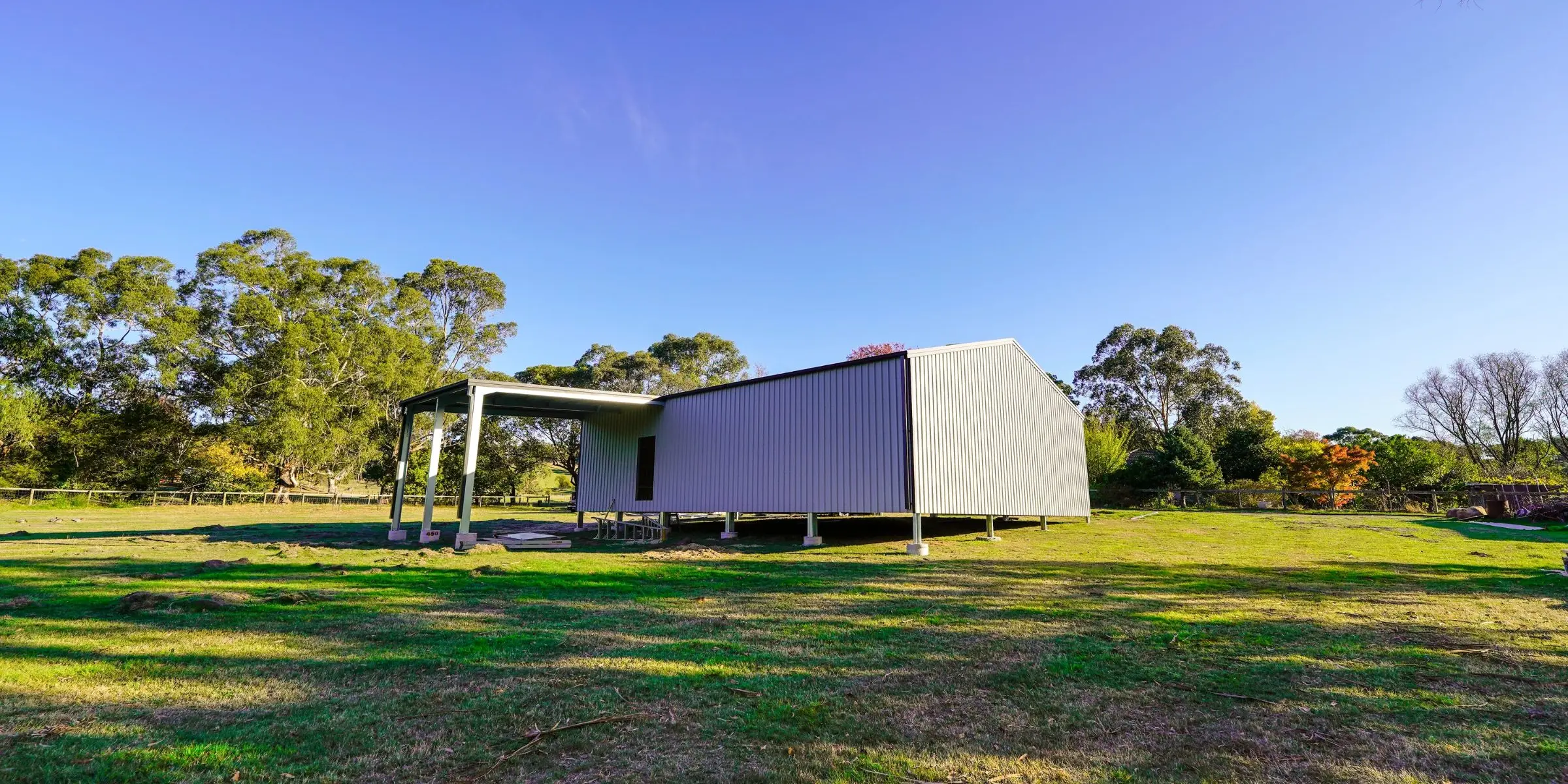
An ideal location for a shed would normally be a flat, well-drained area behind the front building line, away from easements and underground services. Truck access and enough space in front of the most frequently used doors should also be considered. Where you can build your shed will depend on state and local council regulations.
When settling on a spot, think about how you'll use the shed and which way the doors should face. Sun and wind can also affect your choice. You can try different sizes and layouts using the Shed Designer before marking out the shed placement on your block.
Start with the rules that limit where a shed can go

Before choosing where to put a shed, check the restrictions that apply to your property. Placement rules vary between states and local councils, and some areas of your block may not be available for building.
- Setbacks: How close you can build your shed to the property lines depends on state and local council rules, as well as the zoning of your block. If you're thinking of putting it near a side or rear fence, check what's allowed when building a shed on the boundary line.
- Front building line: This line sets the minimum distance a building must sit back from the front boundary of your property. Your shed will often need to go behind this line, although some councils may approve a different placement.
- Easements: An easement is part of your land set aside for services such as sewer pipes or drainage. There are restrictions on building over these areas, so it's best to check what happens if a shed sits over an easement before deciding on your location.
- Overhead power lines: Your shed must be positioned far enough away from overhead power lines to meet the required safety clearances.
- Overlays: Bushfire, flood, heritage and vegetation overlays may place additional restrictions on your shed design or placement. Depending on the overlay, you may need specific building materials, a different location or a permit.
Before finalising your shed placement, check your certificate of title and registered plan for easements, along with your council's planning maps for overlays. Every Fair Dinkum Builds building comes with certified engineering plans for council approval.
Choose level, well-drained ground for your shed

Choosing level ground for your shed could save you money on site preparation, particularly when it comes to laying the concrete slab. You'll also want to check where rainwater goes. Without proper drainage, water can collect around the base of the shed and eventually damage the building or the items stored inside.
Signs of poor drainage include:
- Water pooling after rain
- Soft or boggy ground underfoot
- Moss growing on the ground
- A spot at the lowest point of the yard
- Water running across the area during storms
A sloping block doesn't necessarily mean you can't build a shed there. However, uneven ground may need to be excavated or filled before construction can begin. Depending on the slope, retaining walls or raised footings might also be needed. All this adds to the cost of building a shed on sloped ground. Reactive clay soil can also affect the footing design, which your local Fair Dinkum Builds team can confirm.
If possible, check each potential location after heavy rain. Avoid low lying areas where water collects or flows through the site. Once you've picked a spot, follow the steps for how to prepare the site to make sure the foundations are built on stable ground.
If you're unsure which part of your block will work, Fair Dinkum Builds offers a One Stop Shop service. Your local team can visit the property, assess the ground conditions and offer advice on the proposed shed placement.
Leave room for shed delivery, construction and vehicle access

Getting your steel shed delivered is one thing, but you'll also need to think about how you'll get vehicles in and out once it's built. Check the route to your chosen location before making a final decision.
Truck delivery
You can collect your shed kit yourself, or arrange for it to be delivered to your property. If you go for delivery, you should check the width of the gates and whether the truck will be able to get down the driveway. There's one more thing to consider: the condition of the ground. A loaded truck may not be able to reach the site if the ground is too soft after rain.
Room for the build
Make sure there's enough room around the concrete slab for the builders to work and store their materials and equipment. Any overhanging branches should also be cleared before construction begins. If power lines run across the building site or the access route, check the rules for building under power lines before going ahead.
Driving in and out
For a car, boat, caravan or trailer, check the turning circle in front of the doors. Also check the change of angle where the driveway meets the slab, so low vehicles do not scrape and tall ones clear the door opening.
Room for maintenance
Space surrounding the shed will make it easier to access the walls and clean out the gutters. Space will also prevent leaves from accumulating against the sides of the shed. However, you may be able to build closer to the property boundary if local rules allow it, although you'll have less room for maintenance.
Match the shed's position to how you will use it

The shed should be close to wherever you'll use the things stored inside it. For example, if you're using it every day, you'll probably want it near the house rather than at the far end of the yard. Farm machinery is different, as keeping the shed near the paddocks means less travelling back and forth.
Storage and garden sheds
A storage or garden shed is generally better placed near the back door, with a clear path to the garden. Think about how far you'll need to push the lawn mower or carry your garden tools each time. In a smaller backyard, you'll also want to keep the areas you use for relaxing or entertaining free.
Workshops and hobby sheds
If you're building a workshop, try to position it away from bedrooms and neighbouring homes to reduce noise from tools and machinery. When planning a workshop shed, you'll also need to think about electricity. The further the workshop is from the house, the longer the cable run may need to be.
Vehicle and boat sheds
For a vehicle or boat shed, a spot near the driveway with a straight approach to the doors is generally the easiest option. You don't want to be making tight turns or reversing a trailer a long distance every time you need to get it in or out.
Farm sheds
The shed should be located close to the tracks and paddocks it will serve, with enough turning space for trucks. There should also be adequate space on at least one side to allow for extra bays to be added in the future, particularly with machinery and hay sheds as the farm grows.
Security: Putting your shed in a position where it can be seen from the house or a frequently used path can help prevent unwanted interference. A shed tucked away in a back corner of your property may be less visible.
Power: Any electrical work must be completed by a licensed electrician in Australia.
Which way should a shed face?

Your shed door should ideally face the path or driveway you'll use to get in and out. This will make everyday access easier, although you'll also need to think about which direction the sun, wind and rain come from.
- Sun and heat: Across most of Australia, north-facing walls receive the most sunlight. A steel shed with a long wall exposed to the western afternoon sun can become very hot. Think about where to position the windows and whether you'll need extra shade or ventilation. Fair Dinkum Builds offers insulation and whirlybirds for this purpose.
- Prevailing wind and rain: If possible, avoid positioning large door openings towards the direction of prevailing wind and rain. Otherwise, rain can blow inside when the roller door is open and wet your stored items.
- Natural light: Windows and skylights can bring more natural light into workshops, and both are available through Fair Dinkum Builds. If you'll be working inside during the day, try to avoid a location that's in constant shade.
Planning to add solar panels later? Keep that in mind when choosing your shed's position, as a north-facing section of roof is generally a good place for them.
How the spot you choose changes your shed's wind rating

Two spots on the same block can have different wind exposure, which may change the wind rating required for your shed. Fair Dinkum Builds takes the conditions at each site into account when engineering its buildings.
A shed on a ridge or in an open paddock will usually have more wind to deal with than one further down a slope or near other buildings. Wind tends to pick up speed over high ground, and there's not much to slow it across an open paddock. This is why terrain and topography are taken into account when working out shed wind ratings. Depending on the exposure, the shed may need additional structural strength.
Buildings and trees nearby can help shelter your shed from the wind. However, you can't rely on that protection if there's a chance they'll be removed later. In cyclone regions, trees aren't included when calculating wind shielding, regardless of how close they are.
How to compare two or three spots for your shed

Before settling on the best location for your shed, first eliminate the spots where construction cannot take place. With this done, the remaining options can be compared. This is better done before pouring the concrete slab.
- Mark the shed's footprint in each spot using stakes or a garden hose.
- Check the local rules on setbacks, easements and underground services for each site.
- Stay clear of overhead power lines.
- Cross out any low lying areas that have drainage problems.
- Confirm that a delivery truck can reach the site.
- Provide enough space for vehicles to manoeuvre in front of the shed door.
- Think about the distance you'll need to travel to the shed and how easily you can reach it from your usual paths or driveway.
- If you end up with two possible locations, compare how exposed each one is to the wind.
Ask your local Fair Dinkum Builds team to check your shed site

You can put together your new shed using the Shed Designer and send the shed design off for a quote. Alternatively, request a quote directly and upload a rough sketch of your block.
One of Fair Dinkum Builds' more than 120 local franchisees will then get in touch to check the design and confirm the price for your property. Your local team can also help arrange approvals through the One Stop Shop service.
An unusual block doesn't necessarily mean you can't build the shed you want. A block in Townsville, for example, had a narrow street frontage but opened up towards the back. The local team came up with a five-sided shed for the odd-shaped block.
Once you've narrowed down your preferred spots, have a rough sketch of the block ready. You can get a quote or call 1800 033 284.
Frequently asked questions
Constructing a shed immediately next to your fence may be possible, but this will depend on your local council rules. You must first check the boundary setbacks and building requirements before selecting the location for your shed. You also need to ensure that no roof water or debris ends up on your neighbour's property over the fence line.
There's no single distance that applies across Australia. How close you can build to your house depends on your state and local council requirements. A shed built close to the house may also need fire-resistant construction. You'll need to leave room for water to drain between the two roofs, too.
Building a shed in the front yard can be more complicated because it sits ahead of the house, where it's visible from the street. Approval is generally required, although the placement rules vary between councils. The shed council approval rules also differ from state to state, so check the requirements with your own council before you build.
Try not to place your shed near any big trees if you can help it. Tree roots could end up lifting the concrete slab, and falling branches could damage the roof. You'll also get leaves in the gutters, while constant shade could leave the ground damp. It would be best to place the shed beyond the tree's root zone and canopy.
If you're planning to build your shed over or near a sewer main, you'll usually need approval from the water authority or local council. Before You Dig Australia offers a free service for checking underground utilities, although privately owned pipes on your property may not show up. You can check your drainage plans for these or have a private service locator inspect the block.
Ensure that septic tanks, drains, inspection openings and any areas for disposing of effluent remain accessible for maintenance. You should therefore avoid building your shed over these areas.